|
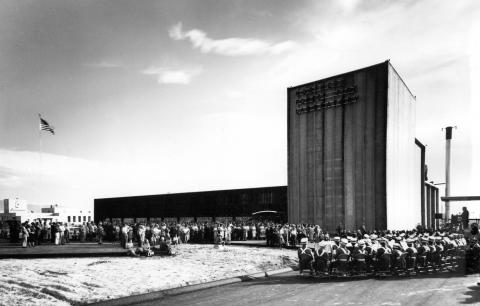
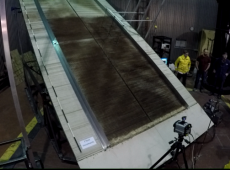
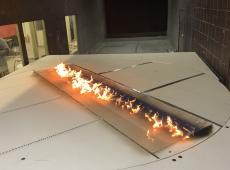
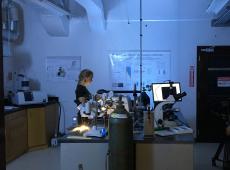
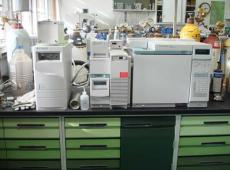
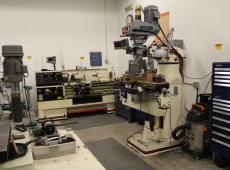
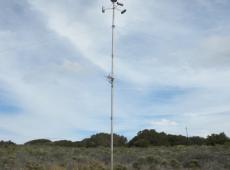
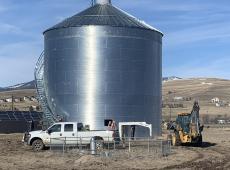
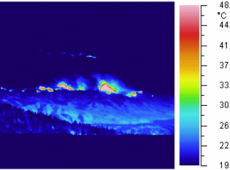
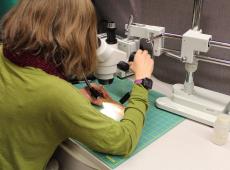
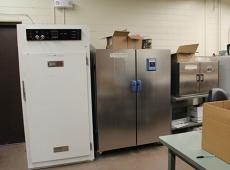
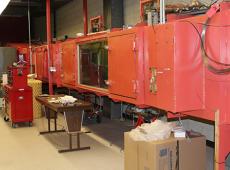
The Missoula Fire Sciences Laboratory staffs over 10 world renowned scientists in addition to wide-ranging and accomplished support personnel. The lab is equipped with state-of-the-art burn chambers, comprehensive laboratory facilities, extensive computing resources, and novel field instrumentation which provide a unique environment to conduct innovative wildland fire research. Original research at the Missoula Fire Sciences Laboratory includes: fire behavior prediction modeling, soil heating modeling and effects, landscape fire ecosystem dynamics, smoke emissions and dispersion modeling, and fire danger rating.
For a tour of the Fire Lab, please contact Wendy Zarbolias.
Focus Areas
The Fire, Fuel, and Smoke Science Program activities are cross-cutting, with considerable integration among Focus Areas.
 Physical Fire Processes- We analyze the combustion process and the factors that determine fire behavior. Increased understanding of combustion helps managers and society anticipate:
- potential for high intensity fire
- initial fire effects
- effects of fuel treatments
- potential for loss of life and destruction of property
 Fuel Dynamics- Research on fuel dynamics helps managers describe the vegetation that burns during wildland fires. Improved information about fuels, including their patterns of change over space and time is used to:
- predict seasonal and multi-year changes
- more accurately predict fire behavior and fire effects
 Smoke Emissions and Dispersion- We use filed observations, satellite data, and models to describe smoke's composition, its movement within a fire's heat plume, and its movement through the layers of atmosphere. This knowledge helps to better understand:
- health concerns associated with smoke
- carbon movement around the globe
 Fire Ecology- This research contributes to improved conservation, restoration of burned areas, and appropriate ecological use of fire. Field and laboratory studies address these questions:
- How do fires and fuel consumption affect plants and plant communities?
- How do fires alter the flow of carbon and nutrients in ecosystems?
- How do fires affect the potential for weeds to establish or increase?
 Fire and Fuel Management Strategies- We use case studies, modeling, and understanding of ecology to develop fire and fuel management strategies. These tools help managers and planners to:
- increase the ability of forests to respond to disturbance and climate change
- reduce unplanned losses of forest cover and stored carbon to fire, insects, and disease
 Science Synthesis and Delivery- Scientific publications form the foundation for science delivery. Synthesis of past research and integration of knowledge build on this foundation. From this science base the FFS Program provides:
|